
Blog Prompt # 2: Who are the leading public intellectuals of our day?


The first people that come to mind as contemporary public intellectuals are David Brooks and Doris Kearns Goodwin. 

Brooks excels in presenting opinions (mainly political) in an enlightened, yet easily understandable way. Brooks consistently provides rational arguments for his opinions, and truly promotes the value of looking at both sides of an issue.

 Doris Kearns Goodwin, the noted historian, places current events into historical contexts in a way that is both informative and entertaining. She is so intelligent and articulate, and I always learn something new when hearing her speak.

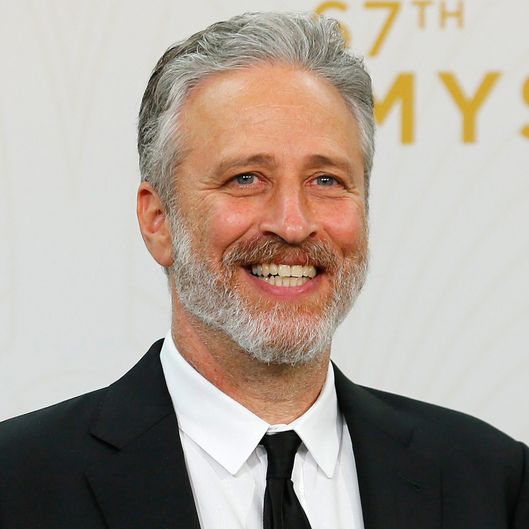
I would also give honorable mentions to Stephen Colbert and Jon Stewart, along with Neil deGrasse Tyson. Colbert and Stewart very successfully use satire and humor to promote their views and educate the public.  DeGrasse is at one both brilliant and down to earth.


Comments

Popular posts from this blog

Class Comments Blog Post

I found the required books for this course really, really interesting, especially the Space of Public Opinion and Nobody.   The progression of the media’s reporting and commenting about current news has changed so much with the advent of the internet.   It seemed like everyone tuned into the nightly network news when I was a kid, but not I don’t really hear anyone talking about last night’s broadcasts.   I can say that I don’t even know the names of the 3 major networks evening broadcasters.   We’ve switched from trusting a knowledgeable news journalist or two to trusting sound bites provided by basically anyone with a Twitter account. But honestly, what will stick with me the most about the class is Hill’s book, Nobody. Hill makes it so apparent that our country has done a lousy job of caring for and providing opportunities for the most vulnerable.   It’s an overwhelming reality that has absolutely no easy solution. I only hope that our leaders and future ...

Blog Response #8: Changing the World One Click at a Time

It’s easy to argue that the various outlets of social media are powerful tools for activism, but their capacity to create radical change is questionable. Social media provides opportunities for individuals and groups to raise awareness to issues quickly and efficiently.   Indeed, social media posts reach huge segments of the world’s population often in real time with subsequent shares making those numbers quickly grow exponentially. The Women’s March held in January is just one example of social media’s enormous, impressive reach. Without social media, the marches held across the world most likely wouldn’t have been so well-attended, but has life somehow changed for women because of the march? There certainly was a renewed sense of unification concerning women’s rights for a time, but the public’s focus quickly shifted to science as April’s Earth Day approached, and a new round of marches popped up.   Therein lies one of the pitfalls of social media as a means to radica...

Blog Prompt: From Nobody to Somebody

Except for the last chapter, Hill does indeed paint a bleak picture regarding the future for so many of our citizens. I must admit that after reading the book, my first reactions were of disgust and despair. How are the people who suffer from these State-sponsored hurdles supposed to break free of them in order to experience a safe and more rewarding life? The first two areas I’d like to see addressed are education, our police forces, and the prison system. I suggested in one of my op-eds that larger, diverse high schools should organize into a variety of learning academies to better prepare students for college and career, but the benefits of such a setting go beyond career potential.   So many students lack a stable, loving home environment.   In my years teaching I have found that a lack of family support is possibly the biggest cause of student failure. The academy model directly addresses the problem because the students matriculate together and oftentimes have the...